
CRM Success Story: How We Got Our Service Business Back on Track
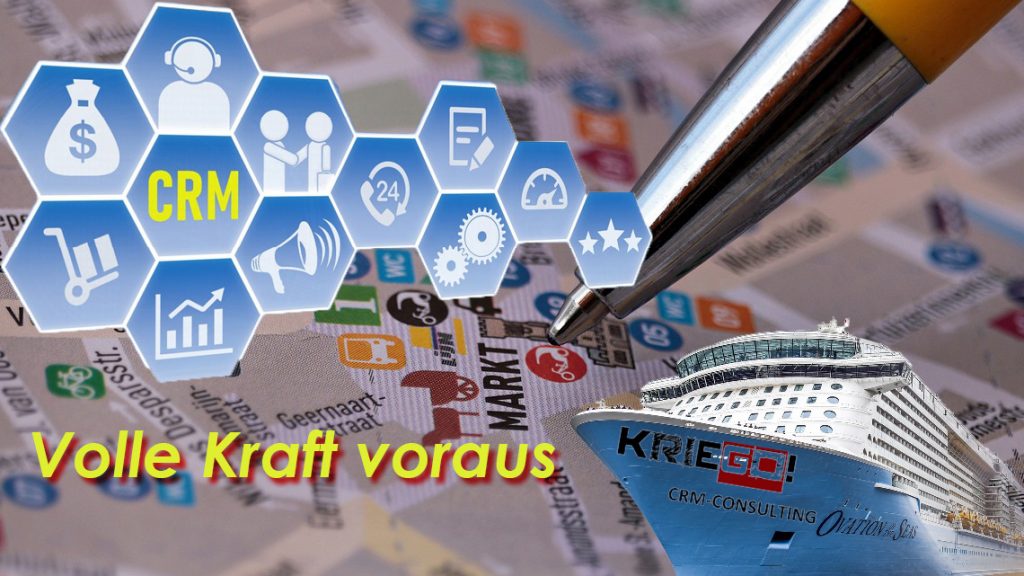
In the dynamic world of services and customer support, our company—a mid-sized business with around 100 dedicated employees—faces the daily challenge of delivering exceptional service while operating efficiently. When we decided to implement a CRM system, we had no idea how profoundly this decision would transform the way we work and manage customer relationships. This is the story of our CRM implementation journey and the key lessons we learned along the way.
CRM Hard Backboard – Stability and Structure for Your Customer Management
Before implementing our CRM system, we faced several challenges:
Unstructured customer information: Our customer information was spread across various tools and Excel spreadsheets. This often led to confusion, as well as missing and inconsistent data.
Inefficient processes: Many of our workflows were manual and time-consuming. Our service employees struggled to respond quickly to customer inquiries.
Lack of insights: Without centralized data, it was difficult for us to make informed decisions or identify patterns in customer behavior.
Our goal was clear: We needed a solution that would provide us with a 360-degree view of our customers, automate processes, and help us deliver highly personalized service at the highest level.
Selecting the Right CRM System
Selecting the right CRM system was the first critical step. We evaluated various solutions, paying particular attention to the following criteria:
User-friendliness: Our team consists of many experienced employees who are not necessarily technology-oriented. An intuitive and easy-to-use user interface was a “must-have.”
Integration: We needed a solution that could be seamlessly integrated into our existing systems and meet our specific requirements in the service area.
Adaptability: Our business is constantly evolving. A CRM system that could be flexibly customized needed to support our future requirements.
After careful evaluation, we chose the CRM Service Module of Microsoft Dynamics 365 Customer Service, which convinced us with both its user-friendliness and its extensive customization capabilities.
Implementation: Step by Step
The implementation was a structured process carried out in several phases:
Needs Analysis and Planning
We started with a detailed needs analysis, during which we examined all business processes and customer interactions. This helped us define specific requirements for the CRM system and create an implementation roadmap.
Training and Change Management
To ensure that all employees could use the new system effectively, we organized training sessions at an early stage. It was important not only to explain how to use the system but also to communicate the benefits of the new solution in order to ensure high user acceptance.
Data Migration and Integration
Migrating our existing customer data into the new CRM system was a critical step. We thoroughly cleansed and structured the data to ensure a seamless integration. In addition, we ensured that the CRM system was integrated with our existing applications, such as ERP, MS Exchange, and our BI tool.
Pilot Phase and Feedback
Before the full rollout, we conducted a short pilot phase with a selected group of key users. This allowed us to make initial adjustments and gather valuable feedback to further optimize the system.
Rollout and Continuous Improvement
After the successful pilot phase, we launched the full rollout of the CRM system. We established regular feedback sessions to continuously improve the solution and ensure that all employees were able to effectively use the required functionalities.
Results and Benefits
The introduction of the CRM system fundamentally changed the way we work. Here are some of the key results:
Centralized customer information: All customer information is now accessible in one place. This has not only increased efficiency but also improved the quality of our customer service.
Automated processes: Many manual tasks have been automated, giving our employees more time for value-added activities. The automation of follow-ups and the use of templates have significantly reduced our response times.
Better insights: Thanks to the comprehensive analytics capabilities of the CRM system, we can now identify patterns in customer behavior and take targeted actions. This has helped us develop proactive service strategies and strengthen customer loyalty.
Increased employee satisfaction: The user-friendliness and structured introduction of the system have resulted in high acceptance among the team. Our employees are more satisfied and motivated because they can now work more efficiently.
Conclusion
The introduction of the CRM system was one of the most important decisions we made for our company. It has helped us significantly improve our customer relationships and the internal processes associated with them. Of course, there were challenges and learning curves along the way, but the positive impact on our business made the effort worthwhile.
Interested in a successful CRM implementation for your company? Contact us.
Das könnte Sie auch interessieren:

jkllkl
jkllkl
jkllkl
jkllkl