

CRM Consulting
FAQs
CRM hub – morpheusconsult
crmHub – The Information Portal for Customer Relationship Management (CRM)
Digital customer relationships are constantly evolving. Companies face the challenge of using customer data efficiently, optimizing processes, and building long-term relationships. This is exactly where crmHub comes in: The information portal provides comprehensive knowledge, current developments, and practical insights into the world of Customer Relationship Management (CRM).
What is crmHub?
crmHub is a specialized information portal covering all topics related to Customer Relationship Management. The platform provides guidance in the complex CRM market and helps readers make better decisions in the field of customer management.
The focus is on well-founded information about:
- CRM systems and CRM software
- CRM strategies and concepts
- Customer retention and customer experience
- Sales and marketing automation
- Digitalization of business processes
- Trends and developments in the CRM environment
Everything about CRM: Knowledge, trends, and solutions for modern customer management
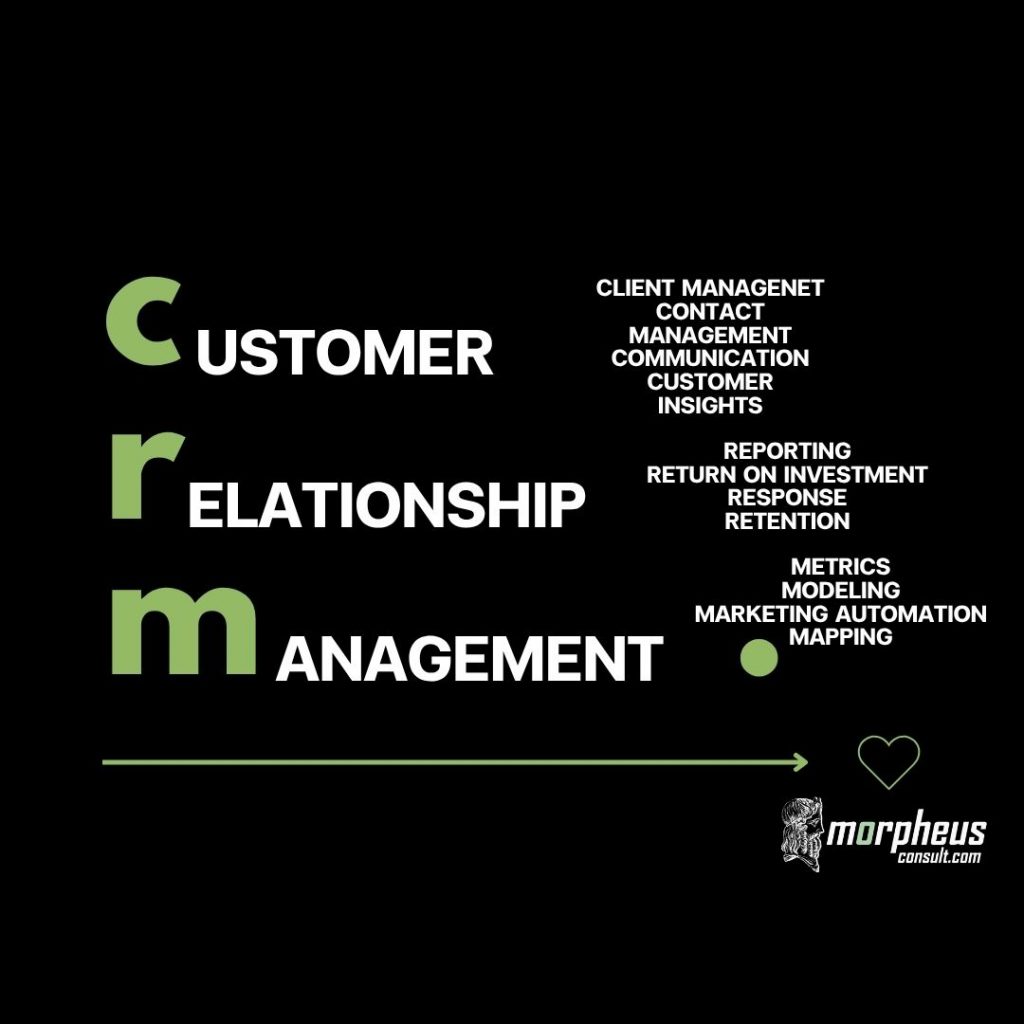
CRM (Customer Relationship Management) refers to the systematic management and optimization of customer relationships. Modern CRM solutions help companies use customer data intelligently, automate processes, and create personalized customer experiences.
With increasing customer expectations and growing digitalization, CRM is becoming a strategic success factor for businesses.
Choosing the right CRM solution partner is crucial for the success of a CRM project. morpheusConsult combines more than 20 years of experience in CRM consulting with comprehensive expertise, strategic guidance, and practical implementation.
As an experienced partner for CRM solutions, morpheusConsult helps companies optimize their customer processes, unlock digital potential, and develop sustainable CRM strategies.
By combining technical expertise, industry knowledge, and a solution-oriented approach, we create CRM solutions that are perfectly aligned with the individual requirements of each business.
morpheusConsult stands for a successful combination of many years of CRM experience, innovative technology expertise, and reliable project delivery.
The key advantages include:
– Over 20 years of experience in CRM consulting: Deep understanding of CRM processes, challenges, and successful solution approaches.
– Comprehensive expertise in CRM projects: Experience in consulting, implementation, optimization, and further development of modern CRM systems.
– Specialized expertise in MS Dynamics 365 and Aurea CRM: In-depth knowledge of established CRM platforms and their individual customization.
– Holistic CRM consulting: From strategy development and concept design to implementation and long-term evolution.
– Reliable project support: Clear communication, structured approaches, and a strong focus on sustainable results.
A CRM system (Customer Relationship Management) can make the difference between average and outstanding customer service. Here are some signs that indicate your company could benefit from a CRM solution:
Disorganized customer data:
When customer information is scattered across different Excel spreadsheets, emails, and notes, it becomes difficult to maintain an overview. A CRM system centralizes this information and makes it easily accessible.
Inefficient communication:
Lack of or uncoordinated communication between sales, marketing, and customer service can lead to confusion and a poor customer experience. With a CRM system, all departments can access the same information and collaborate more efficiently.
Poor customer service:
If customer inquiries are not answered quickly or satisfactorily, the issue may be a lack of visibility into customer histories and preferences. A CRM helps you access this information quickly and easily.
Missed sales opportunities:
Without a CRM system, sales opportunities can easily be overlooked or not followed up on. A CRM reminds your team of important tasks and deadlines, ensuring that no opportunity is missed.
Slow growth rate:
If your company is struggling to grow, the cause may be inefficient processes and limited scalability. A CRM automates many routine tasks and creates more room for strategic growth.
Difficulties with reporting and analysis:
If creating accurate reports on sales and marketing activities is challenging, a CRM system can help. It provides detailed analytics and reports that support informed business decisions.
Lack of personalization:
Today’s customers expect personalized experiences. Without a CRM system, meeting these expectations can be difficult. A CRM helps you create individual customer profiles and run targeted marketing campaigns.
A CRM system can help your company work more efficiently, improve customer service, and ultimately generate more revenue. If you recognize one or more of these signs in your organization, it may be time to consider implementing a CRM solution.
morpheusConsult supports companies throughout the entire CRM lifecycle:
– Analysis of existing CRM processes
– Development of a suitable CRM strategy
– Selection and evaluation of appropriate solutions
– Implementation and customization of CRM systems
– Integration of existing applications
– Optimization and further development after go-live
The focus is not only on technology, but above all on improving business processes and customer experiences.
Yes, CRM solutions can be specifically adapted to the needs and requirements of your industry. A customized CRM solution offers numerous benefits and can play a decisive role in increasing the efficiency and success of your business. Here are some reasons why and how CRM solutions can be tailored to specific industries:
Specific business processes:
Every industry has its own unique business processes and requirements. A CRM system tailored to your industry can support and optimize these specific processes. For example, a manufacturing company requires different CRM functionalities than a service-based organization.
Individual customization:
Many CRM providers offer the ability to customize their solutions. This can range from adapting the user interface and integrating specific modules to automating specialized workflows. These customizations ensure that the CRM system is precisely aligned with your company’s needs.
Industry-specific templates and best practices:
Some CRM solutions provide preconfigured templates and best practices developed specifically for certain industries. These templates can accelerate the implementation process and ensure that you start with proven methods from the beginning.
Integration with industry-specific tools:
A customized CRM system can be seamlessly integrated with other software solutions commonly used in your industry. This includes ERP systems, accounting software, marketing tools, and more. Seamless integration enables a smooth flow of information and provides a holistic view of your business data.
Regulatory requirements:
Many industries have specific regulatory requirements that must be met. A customized CRM system can help fulfill these requirements by providing features such as data protection management, compliance tracking, and reporting.
Scalability and flexibility:
An industry-specific CRM solution can be flexibly adapted to your company’s growth and changing requirements. This ensures that your CRM system grows and evolves with your business.
Improved customer relationships:
By adapting to your specific industry, CRM solutions can help you build deeper and more valuable customer relationships. They enable personalized communication and provide valuable insights into your customers’ needs and preferences.
Whether you operate in retail, healthcare, manufacturing, or another industry — a CRM system tailored to your specific requirements can help you work more efficiently, provide better customer service, and ultimately increase your business success.
What Is a CRM Solution?
A CRM solution (Customer Relationship Management) is software that helps companies manage their interactions and relationships with current and potential customers. The main components and functions of a CRM solution include:
Centralized data management:
A CRM solution collects and stores all customer data in one central location. This includes contact information, communication history, purchase history, preferences, and more. Through this centralized database, all departments have access to the same up-to-date information.
Automation of business processes:
CRM systems automate many routine tasks, such as sending follow-up emails, scheduling appointments, or updating records. This saves time and reduces the risk of errors.
Improved customer communication:
With a CRM solution, companies can personalize and optimize their communication with customers. Features such as email marketing, SMS notifications, and social media integration enable targeted and consistent customer engagement.
Sales management:
CRM systems provide tools for managing and tracking sales opportunities and processes. Sales teams can follow up on leads, create sales forecasts, and monitor the entire sales cycle to ensure that no opportunity is missed.
Customer support and service:
CRM solutions support customer service through features such as ticketing systems, knowledge bases, and chatbots. They enable companies to handle customer inquiries efficiently and increase customer satisfaction.
Analytics and reporting:
CRM systems provide powerful analytics and reporting tools. Companies can create reports on sales figures, customer behavior, marketing campaigns, and more. These insights help businesses make informed decisions and optimize their strategies.
Integration with other systems:
A good CRM solution can be seamlessly integrated with other business systems such as ERP (Enterprise Resource Planning), accounting software, or marketing automation tools. This ensures a smooth flow of information and provides a comprehensive view of business data.
Mobility and access:
Modern CRM solutions often provide mobile apps and cloud-based access, allowing teams to access important customer data while on the move. This increases flexibility and responsiveness.
Scalability:
CRM systems are scalable and can be expanded as the company grows. This ensures that the system continues to meet business requirements in the future.
A CRM solution is therefore much more than just an address management tool. It is a comprehensive platform that helps companies improve customer relationships, optimize business processes, and ultimately increase business success.
How Do You Measure the Success of a CRM Solution?
Measuring the success of a CRM solution is essential to ensure that the investment in the system delivers the expected value. The following key performance indicators and methods can be used to evaluate the success of a CRM solution:
Customer Satisfaction (CSAT):
Customer satisfaction is a key indicator of the success of your CRM solution. It can be measured through surveys, feedback forms, and Net Promoter Scores (NPS). An increase in customer satisfaction after implementing a CRM system indicates successful adoption and usage.
Customer Loyalty and Retention (Customer Retention Rate):
A successful CRM solution should help increase customer retention. This can be evaluated by measuring customer churn rates and analyzing repeat purchases and contract renewals. A lower churn rate and higher repeat business are positive indicators.
Sales Efficiency:
A CRM system should improve the efficiency of your sales team. This can be measured by analyzing sales cycles (the time from lead generation to closing), the number of completed deals, and the average deal size. Shorter sales cycles and an increase in closed deals indicate a successful CRM implementation.
Lead Management:
The effectiveness of lead management can be measured by the number of newly generated leads, the conversion rate from leads to customers, and the time required to qualify leads. A successful CRM solution should improve lead generation and conversion.
Revenue Growth:
A direct way to measure the success of a CRM solution is by analyzing revenue growth. Compare revenue before and after implementing the CRM system. A significant increase in revenue indicates a positive impact of the CRM solution.
Customer Service and Support Performance:
The efficiency and effectiveness of customer support can be measured by analyzing response times, the number of resolved tickets, and customer satisfaction with support services. A faster and more efficient support process is a sign of successful CRM usage.
User Adoption and Satisfaction:
The acceptance and satisfaction of employees using the CRM system are also important indicators. This can be measured through internal surveys and feedback sessions. High user adoption and satisfaction indicate that the CRM system is effective and user-friendly.
ROI (Return on Investment):
ROI is a key metric for evaluating the financial success of a CRM solution. Calculate the total costs of CRM implementation and compare them with the financial benefits achieved, such as increased revenue, cost savings, and efficiency improvements. A positive ROI indicates that the CRM solution is delivering value.
Data Quality and Usage:
A successful CRM solution should improve the quality and utilization of customer data. This can be measured by analyzing data completeness, accuracy, and how effectively teams use the available information. Improved data quality and higher adoption rates are positive indicators.
By regularly reviewing these metrics and adapting CRM strategies, companies can ensure that their CRM solution delivers the desired results and continues to improve over time.
Implementing a CRM solution has a transformative impact on your company. To ensure a smooth and successful process, several important steps should be considered:
Needs Assessment and Goal Setting:
Start by identifying your company’s specific requirements and objectives. What challenges should the CRM solution address? What goals do you want to achieve, such as improved customer satisfaction, increased sales performance, or more efficient processes?
Involve Stakeholders:
Involve all relevant stakeholders in the process at an early stage. This includes executives, sales teams, marketing teams, customer service departments, and IT teams. Their input and support are essential for the success of the CRM implementation.
Selecting the Right CRM Solution:
Research different CRM providers and compare their features, pricing, and customization options. Make sure the selected solution matches your company’s specific needs and objectives. It can be helpful to review demos and test trial versions.
Planning and Budgeting:
Create a detailed implementation plan covering all steps and milestones. Define a budget that includes costs for CRM software, training, implementation services, and any required customizations.
Data Migration and Cleansing:
Prepare your existing customer data for migration into the new CRM system. Clean up the data to ensure it is accurate, complete, and up to date. Plan the migration carefully to avoid data loss.
Training and Change Management:
Provide comprehensive training for your employees on how to use the new CRM solution. Ensure they understand the benefits and feel confident using the system. Implement a change management program to encourage adoption and effective usage.
Pilot Phase and Testing:
Conduct a pilot phase in which the CRM system is tested in a smaller, controlled environment. Use feedback from the pilot phase to make adjustments and optimize the solution.
Implementation and Rollout:
After a successful pilot phase and any necessary adjustments, introduce the CRM system across the entire organization. Ensure that all employees have access to the system and are able to use it effectively.
Continuous Monitoring and Optimization:
Regularly monitor the usage and performance of the CRM system. Collect user feedback and continuously optimize the solution to ensure it continues to meet your company’s changing requirements.
Measuring Success:
Measure the success of the CRM implementation based on the previously defined goals and KPIs. Analyze the impact on business processes, customer satisfaction, and sales results. Use these insights to improve future strategies and initiatives.
By carefully planning and executing these steps, you can ensure that the implementation of your CRM solution is successful and delivers long-term benefits for your company.
What Special Services Does morpheusConsult Offer When Implementing a CRM Solution?
morpheusConsult provides comprehensive services to ensure that the implementation of your CRM solution runs smoothly and successfully. The specialized services we offer include:
Initial Consultation:
Our experts begin with a detailed initial consultation to understand your specific requirements and objectives. We analyze your current business processes and identify areas where a CRM solution can deliver the greatest value.
CRM Coaching and Consulting:
We provide comprehensive CRM coaching and consulting to prepare your team for the successful use of the new CRM solution. Our consultants share best practices and strategies to help you unlock the full potential of your CRM system. We support you in developing a customized CRM strategy aligned with your business goals.
Support in Selecting the Right CRM Solution:
Choosing the right CRM solution is crucial for success. We help you select the CRM software that best meets your specific needs. Our experts evaluate different options and recommend the solution that fits your requirements.
Customization:
Every company has unique requirements. That is why we provide customized CRM solutions to ensure that the system is perfectly tailored to your needs. We adapt the user interface, features, and workflows to ensure optimal usability and efficiency.
Integration:
Seamless integration of your new CRM system with existing applications and data sources is essential for success. We ensure that your CRM solution integrates smoothly into your IT infrastructure, including ERP systems, accounting software, marketing tools, and more. This enables a seamless flow of information and provides a comprehensive view of your business data.
Our goal at morpheusConsult is to make the entire implementation process as simple and efficient as possible. With our extensive experience and expertise, we ensure that your CRM solution is optimally configured and provides sustainable support for your business.
A CRM project includes the planning, implementation, optimization, or further development of a Customer Relationship Management system. The goal is to make customer relationships more efficient, automate processes, and enable better utilization of customer data.
A modern CRM system enables:
– Centralized customer data management
– Automated processes
– Improved sales management
– Transparent customer histories
– More efficient collaboration
– Better decision-making foundations
The future of CRM will be shaped by artificial intelligence, automation, intelligent data analysis, and hyper-personalized customer experiences.
Companies that use CRM strategically create stronger customer relationships and sustainable competitive advantages.
The success of a CRM project can be evaluated using various key performance indicators, including:
– Higher sales productivity
– Improved data quality
– Faster processes
– Increased customer satisfaction
– Improved conversion rates
– Increased adoption and usage of the CRM system
– Common mistakes include:
– Lack of a CRM strategy
– Unclear objectives
– Insufficient user involvement
– Poor data quality
– Excessive focus on technology
– Lack of training and continuous development
CRM projects often fail not because of the technology itself, but due to insufficient preparation, unclear requirements, or a lack of acceptance within the organization. A structured approach and professional support significantly increase the chances of success.
Artificial intelligence enhances modern CRM systems with features such as automated data analysis, intelligent recommendations, predictions, chatbots, and the automation of routine tasks.
AI helps companies respond faster and more individually to customer needs and requirements.
– An AI-powered CRM combines traditional CRM functionalities with artificial intelligence. It enables, for example:
– Automated data analysis
– Intelligent lead scoring
– Sales opportunity forecasting
– Automated customer communication
– Personalized recommendations
As a result, companies can work more efficiently and create better customer experiences.
The most important CRM trends include:
– Artificial intelligence (AI) in CRM
– Automation of business processes
– Predictive analytics and intelligent forecasting
– Personalized customer experiences
– Cloud-based CRM systems
– Integration of CRM with ERP and marketing platforms
– Data quality and centralized customer data platforms
morpheusConsult – Your Experienced Partner for Successful CRM Projects
Successful CRM implementation requires more than just a software solution. The key factors are strategy, experience, and professional execution.
With over 20 years of CRM consulting experience, comprehensive expertise in MS Dynamics 365 and Aurea CRM, and a clear focus on sustainable solutions, morpheusConsult is the ideal partner for companies looking to make their CRM processes future-ready.