
CRM Future: The Essential 2026 Trends You Need to Know
A practical guide for SMEs and managing directors on digital transformation in customer management.
In recent years, Customer Relationship Management (CRM) has evolved from a simple tool for digital contact management into a powerful platform that is deeply integrated into all modern business processes. Those who miss the boat here will quickly lose track in the digital ecosystem.
Imagine you are the managing director of a growing medium-sized company. Your daily challenge is to manage your customer relationships while simultaneously focusing on scaling your business and staying competitive. Welcome to the world of Karin, the protagonist of our story. Let’s accompany Karin on her exciting journey through the revolutionary CRM trends of 2026.
Digital Transformation in a Real-World Test: Learnings for the Future of CRM
Here is the professional, business-optimized English translation of the core trends, diagram text, conclusion, and call to action:
1. AI Becomes the Central Core of the CRM System
In the beginning, Karin is faced with a seemingly massive wall of unstructured data and information. She sighs because she can hardly find the time in her daily operational routine to use all this data strategically to make smarter business decisions.
But then, Artificial Intelligence (AI) enters the scene. AI-powered CRM software solutions transform this confusing wall of data into a clear, digital roadmap. Through Predictive Analytics, Karin gains more precise forecasts and deep insights into purchasing behavior. With generative and analytical AI by her side, every strategic step in sales becomes clearer, faster, and more targeted.
2. Low Barrier to Entry for First-Time CRM Users
In the past, introducing professional customer management software always seemed like a massive, complex, and prohibitively expensive step for Karin’s company. But in 2026, the hurdle is lower than ever. User-friendly, intuitive interfaces (UI/UX) and flexible, modular implementation costs make getting started easier than ever before. Karin quickly realizes: today, even small businesses can benefit from the full advantages of a CRM system without massive IT budgets.
3. Social CRM on the Rise
A lot is happening in Karin’s network as well. Her industry colleague, Max, has noticed how elementary social media has become for lead generation and customer service. With an integrated Social CRM, he tracks brand sentiment in real time and responds immediately to customer comments or inquiries on LinkedIn, Instagram, and similar platforms. The result: stronger customer relationships because the team has a more comprehensive picture of the target audience and can respond to needs in the blink of an eye.
4. CRM Systems Tailored to Specific Needs
The software market is booming and offers CRM systems for almost every specific need. Karin, who initially felt lost in the vast diversity of providers, quickly discovers the benefits of a customized CRM solution. An experienced consultant helps her select the perfect system that seamlessly covers both general standard processes and the unique characteristics of her niche.
5. Consolidation of Sales and Marketing Technology
In the past, Karin hated constantly jumping back and forth between different isolated software tools. Data silos were a daily occurrence. Modern CRM systems put an end to this by consolidating marketing and sales technologies onto a single platform. Automatic synchronization keeps the central contact database completely flawless and up to date. Karin and her team save valuable clicks and can finally focus on what matters most: successful selling.
6. Voice and Conversational Interfaces (Voice CRM)
Efficiency is Karin’s top priority. The deep integration of voice technologies and Conversational AI into modern CRM systems heavily simplifies her daily data management. Instead of painstakingly typing up reports after a long customer meeting, she simply dictates her notes while on the go. The CRM system understands the context, categorizes the data, and handles the rest on its own.
7. Maximum Productivity Through Business Process Automation
Monotonous routine tasks used to cost Karin and her team valuable working hours. Advanced automation features in 2026 take over these workflows entirely. Intelligent chatbots automatically handle standard inquiries in first-level support, while automated email workflows (marketing automation) nurture cold sales leads. Company productivity skyrockets.
8. The Seamless 360-Degree Customer View
A powerful CRM system provides Karin with a completely transparent view of all customer data. Because the system is networked with other business apps and enriches data in real time, she never misses an interaction. Whether it is purchase history, support tickets, or email correspondence—Karin makes informed decisions and optimizes her sales strategies based on solid data. She is closer to her customers than ever before.
9. CRM Data Utilization Across All Business Units
It is a modern misconception that CRM software is only for sales reps. Karin immediately sees that in 2026, the CRM system functions as a collaborative platform for the entire company. Marketing, customer service, accounting, and management all utilize the exact same data foundation. The entire company grows closer together, works across departments, and creates personalized customer experiences at every touchpoint.
       [Marketing]           [Sales]          [Customer Service]
            \                  |                  /
             \                 |                 /
              ▼                ▼                ▼
         ==============================================
         CENTRAL 360-DEGREE CUSTOMER PLATFORM IN CRM (2026)
         ==============================================
              ▲                ▲                ▲
             /                 |                 \
            /                  |                  \
       [Management]       [Accounting]      [Self-Service]
10. The CRM as an Extensible Platform
The days of rigid software architectures are over. Modern CRMs act as flexible platforms. They offer out-of-the-box features like advanced sales automation and deep reporting, but can simultaneously be expanded with specialized industry tools via open interfaces (APIs). This ensures that the central view of the Customer Experience (CX) is maintained at all times.
11. Customer Experience (CX) Becomes the Ultimate Competitive Advantage
Studies show: 85% of customers emphasize that the experience a company provides is just as important as its actual products and services. CRM systems contribute decisively to an excellent customer journey by providing automated knowledge bases and fast support channels. Karin understands: satisfied customers are the most loyal brand ambassadors.
12. Customers Expect Deep Knowledge of Their Needs
In 2026, customers take it for granted that companies have their specific requirements and shared history instantly at hand. Nobody wants to explain their issue three times. The CRM system helps Karin keep all required customer data accessible, clean, and precise. This enables tailored personalization without wasted effort.
13. Younger Generations Drive CRM Adoption
Millennials and Generation Z are increasingly occupying decision-making positions in the B2B and B2C sectors. These digital natives place maximum value on modern technological solutions and cloud-based collaboration. Karin knows that her company must upgrade its technology to remain highly attractive to both young customers and young talent in the job market.
14. A Solo Business is Big Enough for a CRM
The idea that CRMs are only meant for large corporations has long been a myth. Solo entrepreneurs and micro-businesses benefit massively as well. It helps to manage contact data in a structured way and to organize your own workflow efficiently. The best example from Karin’s circle is her friend Angela, who works as a self-employed healthcare nurse. Even for her, a lean CRM has become irreplaceable for keeping track of appointments, patient files, and billing.
15. Standardizing Self-Service Offerings via the CRM
Customers often want answers instantly—and prefer to find them out for themselves. Automated self-service solutions, such as AI-powered customer portals and chatbots, are directly linked to the CRM in 2026. This saves Karin’s team valuable resources while providing customers with answers to their questions 24/7.
16. Predictive Analytics and Advanced Analysis Functions Become Decisive
Gut feeling is a thing of the past. Advanced analytics tools within the CRM platform have become indispensable for Karin’s data-driven growth. They help her identify bottlenecks in the sales pipeline early on, recognize customer churn risks, and seize new market opportunities instantly.
17. Holistic Integration with All Systems (ERP, Accounting & Co.)
A CRM only unfolds its full power when it does not exist in isolation. It must be connected to all operational tools in the company—from the ERP system to the invoicing software. This cross-departmental synchronization ensures a flawless Single Source of Truth. At the same time, this unified CRM strategy strengthens collaboration between sales and marketing (Smarketing).
18. Leveraging CRM Data for Hyper-Personalized Interactions
The data collected in the system allows marketing and sales teams to develop tailored campaigns based exactly on the individual preferences and previous buying behavior of the customers. Karin notes that her customers highly appreciate this personal relevance—conversion rates and customer satisfaction increase noticeably.
19. Mobile CRMs Are Rapidly Gaining Importance
The working world is becoming increasingly flexible and mobile. Field sales representatives need to be able to access the complete customer history anytime and anywhere. Mobile CRM apps offer exactly this flexibility on smartphones and tablets. As a result, Karin’s sales team remains fully operational and productive while traveling, on-site with customers, or in the home office.
Conclusion: Actively Shaping the CRM Future Instead of Waiting
With these forward-looking trends in mind, Karin is perfectly equipped. She sees firsthand how the introduction of a modern, future-proof CRM system transforms her medium-sized company. It helps her manage customer relationships more efficiently, professionalize communication, make sound data-driven decisions, and take productivity to a new level. In 2026, a CRM is no longer a mere administrative tool—it is the most important strategic partner for long-term business success.
Karin is thrilled by the digital possibilities of the future. She has decided to wait no longer and has actively embarked on the journey of digital transformation.
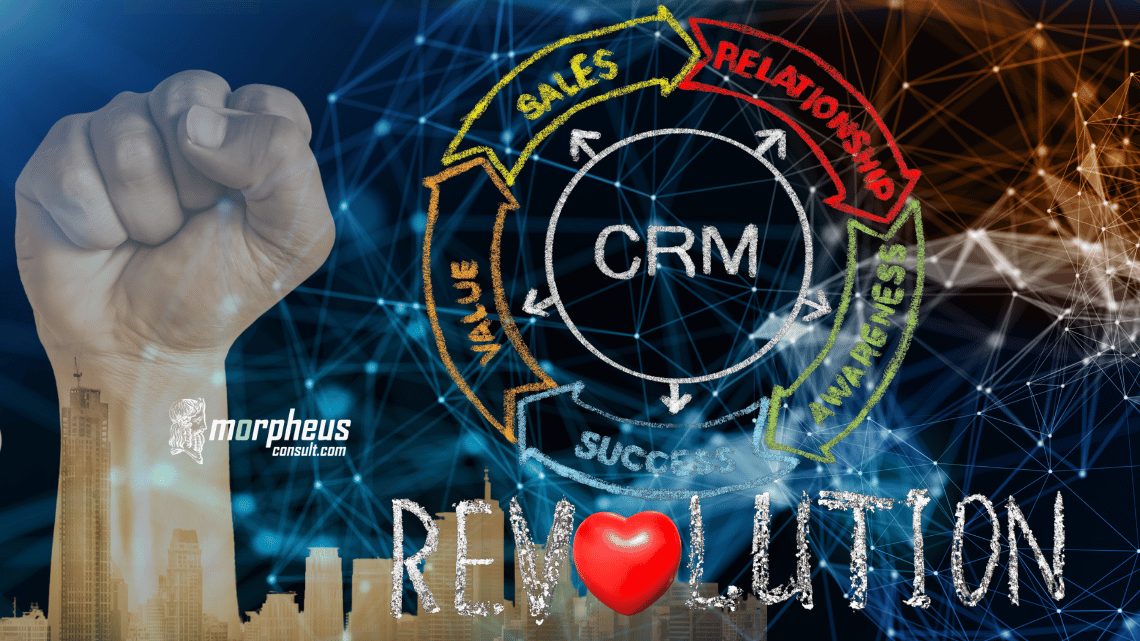
Ready to Revolutionize Your CRM Strategy?
Do you want to follow Karin’s lead and prepare your company for the future? Selecting and implementing the right platform requires experience and strategic nuance.
morpheusConsult, your experienced CRM expert from Austria, is ready to support you in your endeavor. We accompany you independently—from selecting the optimal platform to customized implementation into your existing system landscape.
Contact us today, learn more about the latest CRM developments, and start your journey into a successful, digital future!
Das könnte Sie auch interessieren:
jkllkl
jkllkl
jkllkl
jkllkl